
Parents are sometimes surprised when a dentist recommends a filling for a baby tooth. If the tooth will eventually fall out, why repair it?
The answer depends on the tooth, the decay, your child’s symptoms, and how long the tooth is expected to remain. Some baby teeth need to function for several more years. Untreated decay can cause problems during that time.
Fillings for baby teeth can restore damaged areas and help preserve a tooth’s function. However, not every area of decay needs the same treatment. An examination helps determine whether preventive care, a filling, or another approach is appropriate.
At Brookside Family Dentistry, we explain the findings and recommendations so you can make informed decisions about your child’s care.
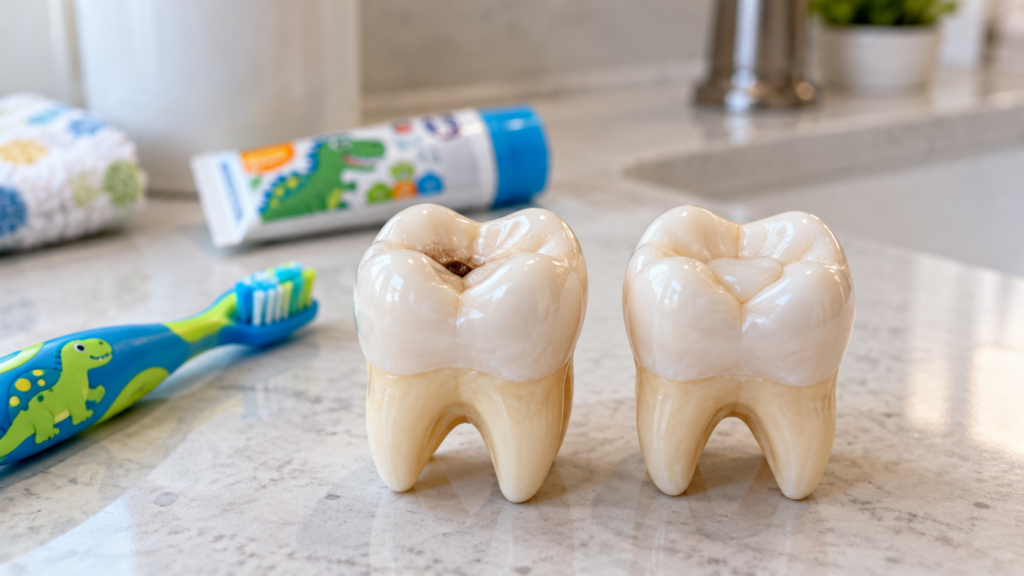
Why Baby Teeth Still Matter
Baby teeth help children chew, speak, and smile. They also help preserve space for permanent teeth developing beneath them.
Although front teeth usually fall out earlier, some primary molars remain for several additional years. Waiting for a damaged tooth to fall out may leave time for decay to progress and cause discomfort or infection.
Losing certain baby teeth too early can also allow neighboring teeth to shift. Whether this affects permanent-tooth spacing depends on which tooth is lost and the child’s stage of development.
Our approach to children’s dentistry emphasizes prevention, early detection, and clear explanations. The goal is to recommend care based on your child’s needs and the tooth’s condition.
What Happens if a Cavity Is Left Untreated?
Tooth decay begins when acids produced by bacteria cause the tooth to lose minerals. Early changes in enamel may sometimes be stopped or reversed with appropriate preventive care.
Once decay creates a physical hole, the missing tooth structure does not grow back. Professional care is needed to assess the damage and decide how to manage it.
Decay may progress into deeper layers of the tooth, causing sensitivity or pain. If it reaches the inner tissue containing nerves and blood vessels, infection can develop. A painful tooth may interfere with eating, sleeping, and daily activities.
Do not wait for the tooth to fall out if your child has tooth pain, swelling, or fever associated with a dental concern. Contact a dentist promptly. Difficulty breathing or swallowing requires emergency medical care.
How Does the Dentist Decide Whether a Filling Is Needed?
A recommendation considers more than the presence of a dark spot or the fact that the tooth is temporary.
During an examination, the dentist evaluates:
- The size, location, and activity of the decay.
- Pain, sensitivity, and signs of infection.
- The amount of remaining tooth structure.
- How long the tooth is expected to remain.
- Your child’s cavity risk, health, and ability to complete treatment.
Dental X-rays may be recommended when they are needed to evaluate areas that cannot be seen fully during the examination. They are not automatically required at every visit.
A tooth’s expected lifespan matters, but it does not override symptoms or infection. A loose tooth also needs evaluation before assuming it is ready to fall out naturally.
When Preventive Care and Monitoring May Be Appropriate
An early area of decay without a physical opening may sometimes be managed through fluoride, improved brushing, dietary changes, and professional monitoring.
Monitoring means following a specific care plan and checking for improvement or progression. It does not mean ignoring the area until the tooth hurts.
The dentist considers whether the decay is active and whether the family can maintain the recommended care and follow-up schedule.
When a Filling May Help
A filling may be appropriate when a tooth has a cavity and enough structure remains to support a restoration.
The dentist prepares the affected area and places filling material to restore the tooth’s shape and function. This can reduce spaces where food collects and help protect the remaining tooth.
Brookside Family Dentistry provides tooth-colored fillings. The recommended material and approach depend on the tooth and clinical findings.
A filling repairs damage, but it does not control the underlying decay process by itself. Preventive care and follow-up remain important after treatment.
When Another Treatment May Be Needed
A large cavity, extensive damage, or involvement of the tooth’s inner tissue may require care beyond a standard filling.
The dentist may discuss another restorative approach, additional treatment, referral, or removal if the tooth cannot be appropriately retained. These decisions depend on the examination and your child’s circumstances.
A tooth that looks only slightly damaged at home may have decay between teeth or beneath the surface. Appearance alone cannot determine which treatment is suitable.
What Happens During a Child’s Filling Appointment?
Before treatment, the dental team explains the plan and discusses your child’s health, comfort, and previous dental experiences. Share concerns about anxiety, sensitivity, or difficulty tolerating appointments.
The process commonly includes:
- Explaining the visit using age-appropriate language.
- Numbing the treatment area when needed.
- Preparing the affected portion of the tooth.
- Placing the restorative material.
- Shaping and checking the filling and bite.
The amount of tooth preparation depends on the cavity and treatment approach. The dentist aims to preserve suitable tooth structure while providing an appropriate restoration.
Parents can help by using calm, honest language. For example: “The dentist will explain how they are going to repair your tooth.” Avoid describing frightening experiences or promising that your child will feel nothing.
Afterward, ask about eating, numbness, cleaning around the tooth, and symptoms that should prompt a call. Follow the instructions provided for your child rather than assuming every filling has the same aftercare.
Can Baby-Tooth Cavities Affect Permanent Teeth?
A cavity in a baby tooth does not automatically mean the permanent tooth underneath has a cavity. However, untreated disease can still affect the developing smile.
Infection can involve tissues around the primary tooth. Early tooth loss may also affect the space available for a permanent tooth, depending on the tooth involved and when it is lost.
Children with cavities may have risk factors that continue as permanent teeth erupt. Frequent sugary drinks or snacks, difficulty cleaning certain surfaces, and limited fluoride exposure can affect both sets of teeth.
Treating the current cavity and reviewing the factors behind it helps the family plan ongoing care. A filling addresses one damaged area; prevention supports the rest of the mouth.
How Can Parents Help Prevent More Cavities?
Children benefit from a home-care routine they can follow consistently with adult support.
Brush twice daily with fluoride toothpaste. Use a rice-sized smear for children younger than three and a pea-sized amount for children ages three through six. Help or supervise brushing so all tooth surfaces are cleaned, and discourage swallowing toothpaste.
Clean between teeth that touch. Offer water regularly and limit frequent sugary snacks and drinks, including juice. Avoid putting a child to bed with a bottle or cup containing milk, juice, or other sugary liquids.
Professional fluoride treatments or sealants may be recommended according to the child’s teeth and cavity risk. Our preventive dental care is individualized.
Keep recommended dental exams and cleanings so the team can assess changes, check restorations, and adjust the prevention plan.
Frequently Asked Questions About Fillings for Baby Teeth
Do baby teeth need fillings if they will fall out?
Sometimes. A tooth expected to remain for years may benefit from restoration if it has a cavity. The dentist weighs the damage, symptoms, remaining structure, and expected timing of natural tooth loss.
What if the baby tooth is already loose?
The dentist should confirm why it is loose and how close it is to coming out naturally. Monitoring may be appropriate in some cases, but pain or infection can require treatment even when a tooth is temporary.
Are children’s fillings the same as adult fillings?
The goal is similar: restore a damaged tooth’s shape and function. Baby teeth have different anatomy, and treatment is adjusted for the child’s needs and the tooth’s expected lifespan.
Will my child need an X-ray before a filling?
Not in every situation. X-rays may be recommended to assess decay between teeth or other findings that cannot be fully evaluated visually. The decision depends on clinical need.
Can I tell whether my child has a cavity at home?
You might notice a spot, hole, sensitivity, or pain, but early decay can be symptom-free. Some damage is hidden between teeth. A dental examination is needed to identify the concern and recommend care.
Discuss Your Child’s Tooth With Brookside Family Dentistry
A temporary tooth can still need treatment. The right approach depends on its condition and your child’s overall needs.
At Brookside Family Dentistry in O’Fallon, MO, we provide family-focused care and take time to explain findings, answer questions, and discuss treatment options.
Schedule your child’s dental exam if you have concerns about a possible cavity or want guidance about your child’s next steps.


