
If it has been months or even years since your last dental appointment, scheduling a visit can feel like a bigger step than it really is.
You may wonder what the dentist will find, whether you will need extensive treatment, or whether your first appointment will involve X-rays or a cleaning.
If embarrassment or uncertainty has made it harder to schedule, your first visit back can simply be an opportunity to understand where your oral health stands today and what, if anything, needs attention.
At Brookside Family Dentistry, the goal is to listen to your concerns, evaluate your current oral health, explain the findings clearly, and help you understand appropriate next steps.
You do not need to have everything figured out before you return. That is what the evaluation is for.
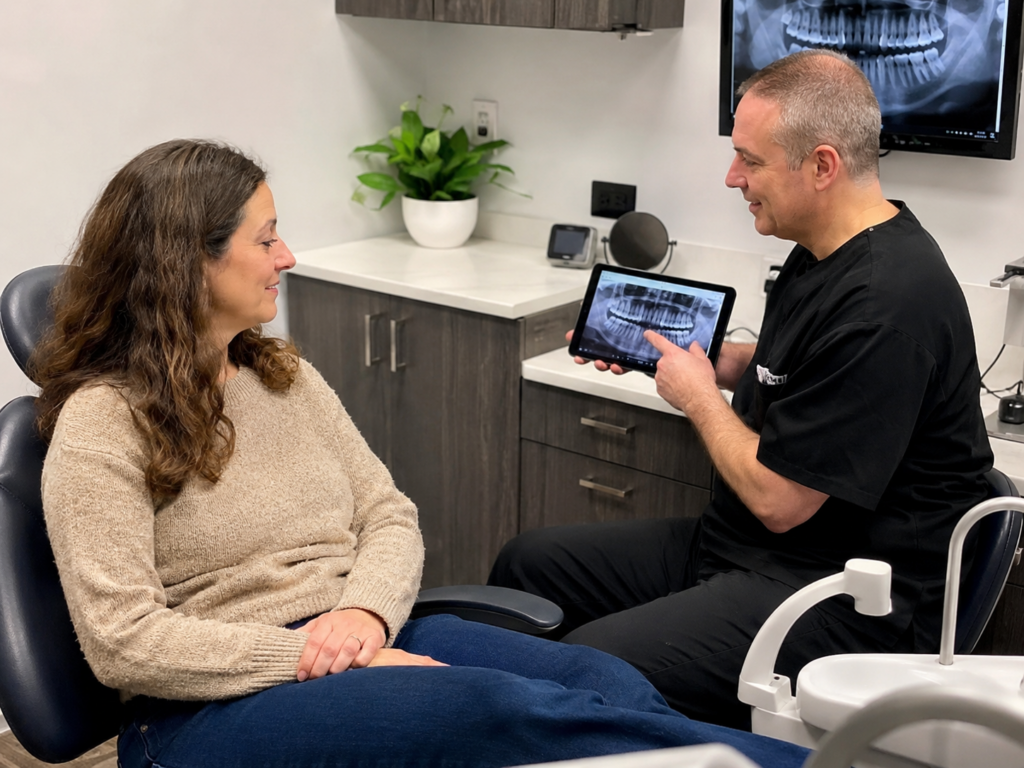
Haven’t Been to the Dentist in Years? You’re Not Alone
People take breaks from dental care for many reasons.
A busy schedule, dental anxiety, moving to a new area, changes in personal circumstances, or simply falling out of the routine can all play a role.
Whatever the reason, returning gives you a chance to establish a new starting point.
You do not need to have perfect teeth before scheduling an appointment. In fact, understanding whether anything has changed is one of the purposes of a dental examination.
Rather than focusing on how long it has been, your dental team can focus on what your smile needs now.
Your Visit Starts With a Conversation
Before making recommendations, your dental team needs to understand you.
During a first visit back, you may be asked about:
- Your dental history
- Relevant health conditions
- Medications
- Current symptoms
- Previous dental treatment
- Concerns you would like evaluated
- Previous experiences that may affect your comfort
This is also a good time to mention changes you have noticed, even if they do not seem urgent.
These might include tooth sensitivity, bleeding gums, damaged dental work, jaw discomfort, changes in your bite, or concerns about the appearance of your smile.
Sharing that information gives your dentist useful context before the examination begins.
What Happens During the Dental Exam?
A comprehensive dental examination helps establish a current picture of your oral health.
During dental exams and cleanings, your dental team can evaluate your teeth, gums, existing restorations, and other areas of the mouth.
The goal is to identify:
- Areas that appear healthy
- Changes that may need monitoring
- Existing dental work that may need attention
- Signs of decay or damage
- Gum or supporting-tissue concerns
- Other findings that may warrant further evaluation
If it has been a long time since your last appointment, the examination is not about criticizing your previous dental habits.
It is about establishing an accurate starting point so you and your dentist can make informed decisions from here.
Will I Need Dental X-Rays?
Possibly, but returning after a long absence does not mean every patient automatically needs exactly the same X-rays.
Your dentist may consider factors such as:
- Your dental history
- Available previous records
- Current symptoms
- Clinical examination findings
- Areas that require additional evaluation
Dental X-rays can provide information that is not always visible during an examination alone, including information about areas between teeth, existing restorations, and supporting structures.
Brookside Family Dentistry uses digital dental X-rays when appropriate as part of its diagnostic capabilities.
The type and extent of imaging should depend on the information your dentist needs for your individual situation.
The Exam Looks Beyond Your Teeth
A comprehensive dental visit involves more than looking for cavities.
Your dental team will also evaluate your gums and the tissues that support your teeth.
This helps determine whether routine preventive care is appropriate or whether periodontal concerns need additional attention.
Importantly, missing dental appointments does not automatically mean that you have gum disease.
The soft tissues of the mouth may also be examined for changes or abnormalities that could require additional evaluation. Brookside Family Dentistry includes oral cancer screening as part of its preventive approach.
A screening does not provide a definitive diagnosis of cancer. It is an opportunity to identify areas that may deserve a closer look or further evaluation.
Will I Get a Cleaning at My First Visit Back?
Many patients assume that the first appointment after a long break will automatically include a routine cleaning.
Sometimes it may.
However, the appropriate type of hygiene care depends on the condition of your teeth and gums.
If your periodontal health is appropriate for routine preventive care, a professional cleaning may be recommended.
If the examination identifies periodontal disease requiring different treatment, another approach may be more appropriate.
For selected patients, scaling and root planing may be recommended as part of periodontal care.
This is why evaluating your gum health before determining the appropriate cleaning or periodontal treatment is important.
What If the Dentist Finds Cavities or Other Problems?
Finding a dental concern after being away for a while does not automatically mean you will need extensive treatment.
Some patients may have relatively few findings.
Others may have decay, damaged restorations, periodontal concerns, or teeth that need further evaluation.
If treatment is recommended, the appropriate option should depend on the actual condition of the tooth or surrounding tissues rather than simply on how long it has been since your last appointment.
A smaller concern may require a different approach from a tooth with more extensive damage.
The important point is that treatment should be based on your individual findings, not on assumptions about what happens to everyone who has missed dental visits.
What If the Dentist Finds Several Problems?
Learning that more than one concern needs attention can feel overwhelming, especially if you were already nervous about returning.
Multiple findings do not necessarily mean every treatment has the same urgency or needs to happen immediately.
Your dentist should explain:
- Which concerns deserve earlier attention
- Why a treatment is being recommended
- Which findings may reasonably be monitored or addressed later
- Whether alternatives are available
- Whether treatment can be divided into stages
You should also feel comfortable asking questions such as:
- Why does this need attention first?
- What may change if treatment is delayed?
- Are there different treatment options?
- Can anything be monitored?
- Can treatment be completed in stages?
Patient education is an important part of making informed decisions.
A treatment plan should help you understand what was found and why the recommended next steps make sense.
What If I Have Dental Anxiety?
If nervousness contributed to your long break from dental care, tell the dental team.
Dental anxiety is common enough that there is no reason to hide how you feel.
Letting your dentist know about your concerns gives the team an opportunity to communicate with you more effectively.
You can also explain whether:
- You have had a difficult dental experience in the past
- Certain parts of dental treatment make you especially nervous
- You prefer more explanation before the dentist proceeds
Brookside Family Dentistry emphasizes gentle, comfortable care and clear communication.
No dental practice can promise that every appointment will be completely free of discomfort or anxiety. However, open communication can help the team better understand your concerns and make reasonable adjustments when possible.
What If I Have an Urgent Dental Problem?
A routine return-to-care visit is different from an urgent dental concern.
If you develop significant pain, swelling, dental trauma, or another problem that may require prompt attention, contact the office rather than waiting for a future preventive appointment.
Brookside Family Dentistry provides emergency dentistry for concerns that need timely evaluation.
The appropriate treatment depends on what is causing the problem.
How Can You Get Back Into a Preventive Routine?
Your first appointment back is only the beginning.
Once your dentist understands your current oral health, you can work together on an appropriate preventive routine.
This may include professional dental care along with individualized recommendations for brushing, flossing, and other home-care habits.
Consistent preventive dental care gives your dental team an opportunity to monitor changes over time and identify concerns that may benefit from attention.
The goal is not to make up for every missed appointment.
It is to establish habits that support your oral health moving forward.
Your recommended schedule should be based on your individual needs rather than assuming everyone needs exactly the same approach.
Your First Visit Back Is a Fresh Starting Point
If it has been a long time since you visited the dentist, you do not need to know exactly what treatment you need before making an appointment.
Your first visit is an opportunity to discuss your concerns, evaluate your current oral health, understand any findings, and ask questions about your options.
If treatment is recommended, you and your dental team can discuss what deserves attention and determine appropriate next steps.
Brookside Family Dentistry provides compassionate, comprehensive dental care for individuals and families in O’Fallon, with an emphasis on comfort, education, prevention, and long-term relationships.
Whether your last dental visit was relatively recent or several years ago, the focus can remain on what your oral health needs today and how to move forward from here.
Ready to return to dental care? Contact Brookside Family Dentistry to schedule your visit and establish a fresh starting point for your oral health.



